
How can AI automation save a small business time and money?
AI automation saves money when it reduces repetitive admin, improves speed-to-lead, captures missed enquiries, and helps staff spend more time on paid work.
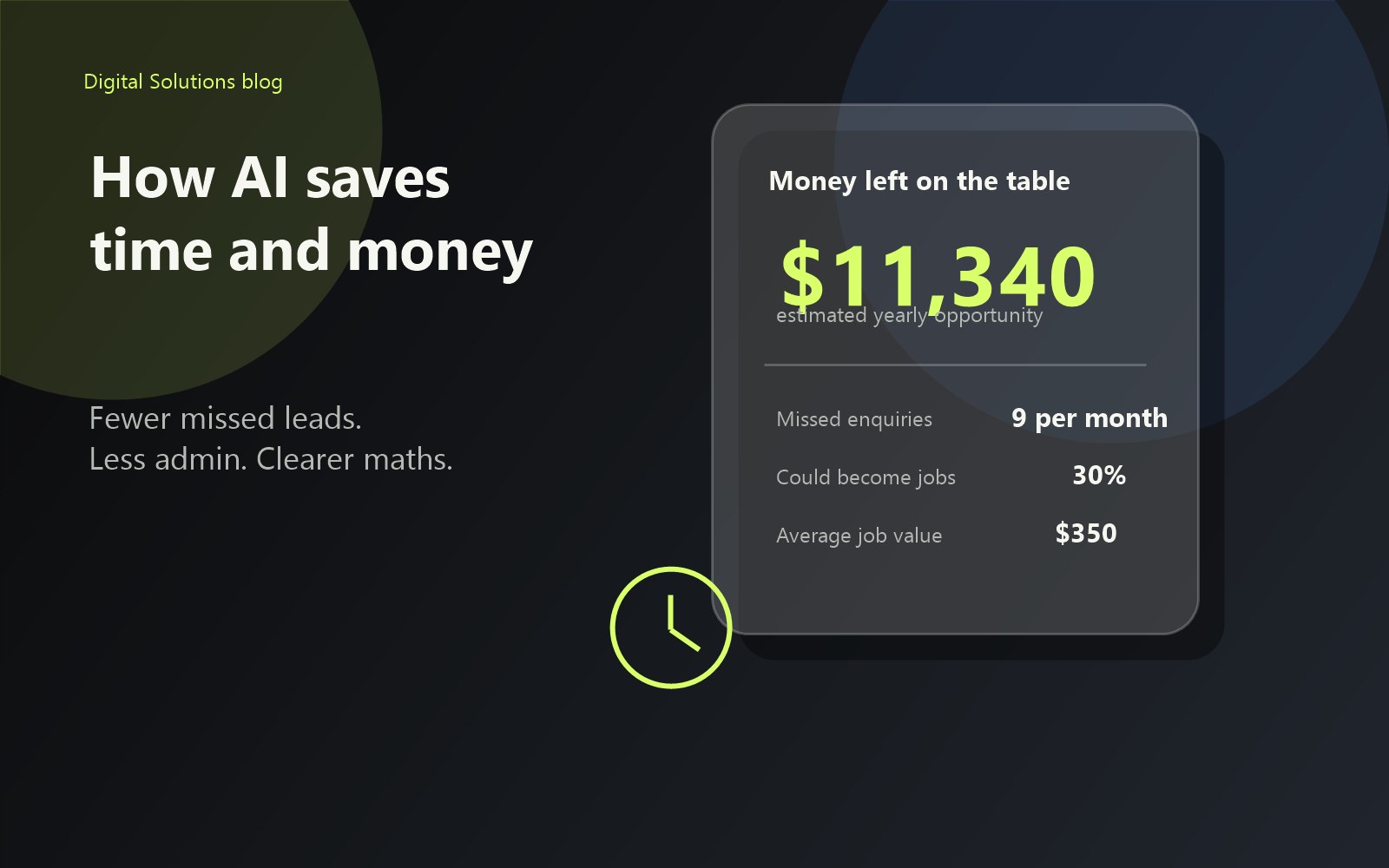
AI automation saves a small business money when it removes repetitive admin, replies faster to leads, collects better quote details, sends reminders, and follows up consistently. The return is usually a mix of time saved, fewer missed enquiries, better conversion, and less owner stress.
- AI saves time by handling repetitive first replies, quote questions, reminders, and follow ups.
- The easiest saving to measure is admin time: hours saved per week multiplied by the hourly cost of that time.
- The bigger upside is often recovered revenue from faster replies and fewer missed leads.
- Start with one workflow that repeats every week before trying to automate the whole business.
Where does AI automation save money first?
For most local service businesses, AI does not create value because it sounds futuristic. It creates value because it handles small repeated jobs that quietly consume the week.
Think about the normal customer journey: someone asks a question, requests a quote, sends a WhatsApp message, forgets an appointment, or needs a review link after the job. None of those tasks are complicated on their own. The cost appears when they happen again and again.
What is the simple maths behind the saving?
Start with this formula:
If the owner or receptionist spends 6 hours per week answering repetitive messages and their time is worth AUD 75 per hour, the admin saving is:
That number does not include extra leads won from faster replies. It only counts time that can be moved away from repetitive admin and back into paid work, quoting, customer service, or operations.
What workflows usually create the fastest return?
| Workflow | Time or money problem | What AI helps with |
|---|---|---|
| Website chatbot | Visitors leave without asking for help | Answers questions, collects details, sends the lead to the next step |
| WhatsApp assistant | Messages arrive while the owner is busy | Replies instantly, asks job questions, sends booking or quote links |
| Quote intake | Quotes need missing photos, location, urgency, or notes | Collects the right details before the team prepares the estimate |
| Reminders | Customers forget bookings or appointments | Sends confirmation and reminder messages automatically |
| Review requests | Happy customers forget to leave Google reviews | Sends a polite request after the job is completed |
How does faster response protect revenue?
Many customers contact more than one business. If one company replies in two minutes and another replies tomorrow, the faster business often gets the conversation. AI helps by creating the first response while the team is busy.
Here is a conservative example. A business gets 40 enquiries per month. Five of those enquiries normally slip through because replies are slow or details are missed. If AI recovers just two extra jobs worth AUD 500 each, that is AUD 1,000 in recovered monthly revenue before counting admin savings.
What should you automate first?
Do not start with everything. Start with the workflow closest to revenue and easiest to measure.
- Find the repeated question. What do customers ask every week?
- Find the slow handoff. Where does the lead wait for a reply?
- Find the missing information. What does the team ask for before quoting or booking?
- Find the follow-up gap. Which reminders, review requests, or lead follow ups are forgotten?
What does a good AI automation system look like?
A good system does not pretend to replace the business owner. It acts like a fast front desk. It answers approved questions, collects useful details, routes the customer, and tells the team when human judgement is needed.
The best setup is practical: chatbot or WhatsApp assistant first, quote intake next, reminders and reviews after the booking, then reporting so the business can see what changed.
Want to know where AI could save time in your business?
Book a free AI automation audit. We will map your current lead flow, estimate the admin time being lost, and show which automation should come first.
Book a Free AI Automation AuditFAQ
How much money can AI automation save a small business?
It depends on the workflow. A simple estimate is hours saved per month multiplied by the hourly cost of the person doing that work, plus the value of extra leads recovered through faster response.
What should a small business automate first?
Start with repetitive lead response: website enquiries, WhatsApp replies, quote intake, missed-call follow up, reminders, or review requests. These tasks are frequent, measurable, and close to revenue.
Will AI automation replace staff?
For most local businesses, AI should reduce repetitive admin rather than replace staff. The best systems collect details, answer approved questions, and hand off to a human when judgement is needed.
How do I know if AI automation is worth it?
Track three numbers before and after: time spent on admin, response time to new leads, and number of enquiries that reach the next step. If those improve, the system is creating value.